
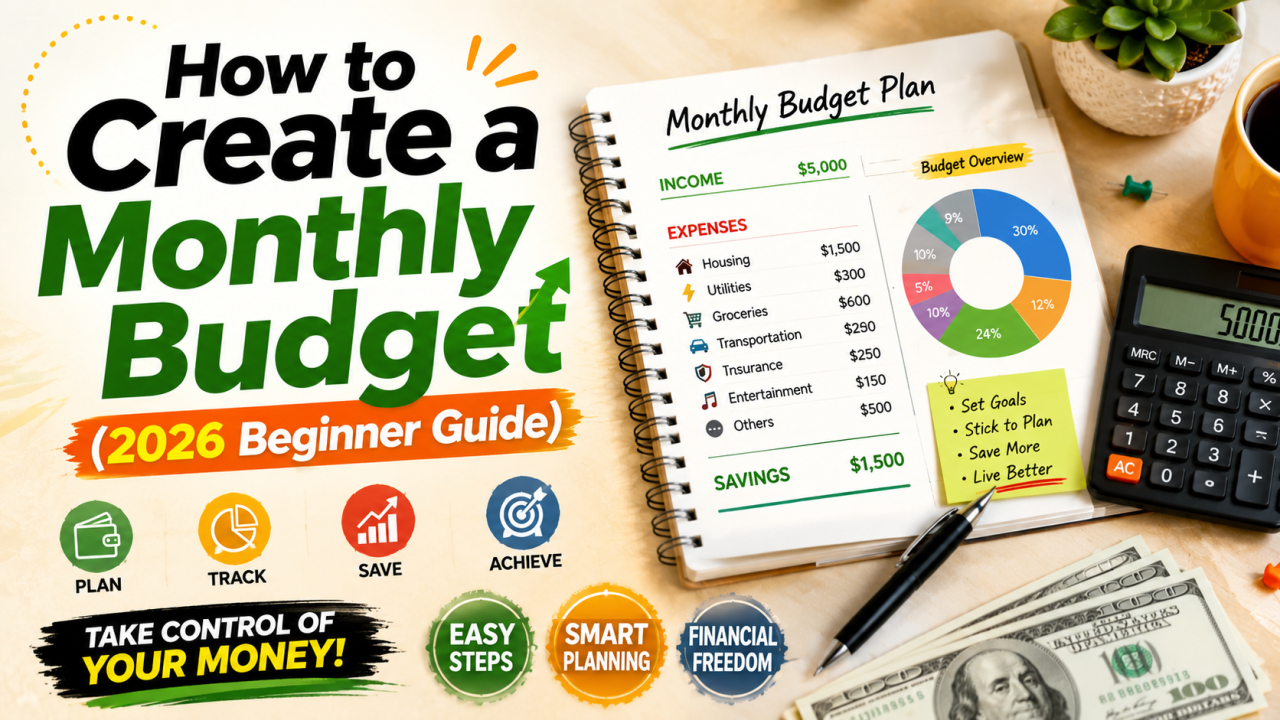
How to Create a Monthly Budget (2026 Beginner Guide)
Managing your money doesn't have to be complicated. Whether you're a student, working professional, freelancer, or business owner, creating a monthly budget is one of the smartest financial habits you can build.
A well-planned budget helps you understand where your money goes, control unnecessary spending, prepare for emergencies, and achieve your financial goals faster.
The good news? You don't need expensive software or advanced financial knowledge. With a simple plan and a few practical strategies, anyone can create a budget that works.
In this complete 2026 beginner guide, you'll learn how to create a monthly budget, track your income and expenses, choose the right budgeting method, and build healthy money habits that last.
What Is a Monthly Budget?
A monthly budget is a financial plan that outlines how much money you expect to earn and how you intend to spend or save it during a month.
Instead of wondering where your money went, a budget gives every dollar a purpose before you spend it.
A good budget includes:
- Monthly income
- Fixed expenses
- Variable expenses
- Savings
- Investments
- Debt payments
- Emergency fund contributions
Budgeting isn't about restricting yourself—it's about making informed financial decisions.
Why Is Budgeting Important?
Creating a monthly budget offers several long-term benefits.
Benefits of Budgeting
- Gain control over your finances
- Reduce unnecessary spending
- Build an emergency fund
- Avoid debt
- Save for future goals
- Improve financial confidence
- Reduce money-related stress
- Prepare for unexpected expenses
Even a simple budget can make a significant difference over time.
Step 1: Calculate Your Monthly Income
The first step in creating a budget is knowing exactly how much money you earn each month.
Include all sources of income, such as:
- Salary
- Freelance work
- Business income
- Rental income
- Side hustles
- Investment income
- Government benefits
If your income changes each month, calculate the average income from the last six to twelve months.
Step 2: List All Your Monthly Expenses
Next, write down every expense.
Divide them into two categories.
Fixed Expenses
These usually stay the same each month.
Examples include:
- Rent or mortgage
- Insurance
- Loan payments
- Internet
- School fees
- Subscription services
Variable Expenses
These change from month to month.
Examples include:
- Groceries
- Transportation
- Dining out
- Entertainment
- Shopping
- Fuel
- Medical expenses
Tracking your spending for one or two months gives you a realistic picture of where your money goes.
Step 3: Separate Needs from Wants
One of the easiest ways to improve your budget is to distinguish between essential expenses and optional spending.
Needs
- Housing
- Utilities
- Groceries
- Healthcare
- Transportation
- Insurance
Wants
- Streaming subscriptions
- Dining out
- Online shopping
- Premium memberships
- Entertainment
- Luxury purchases
Reducing unnecessary spending doesn't mean eliminating fun—it simply helps you prioritize your financial goals.
Step 4: Choose a Budgeting Method
There isn't a one-size-fits-all budgeting system. Choose one that matches your lifestyle and financial goals.
Popular Budgeting Methods
There are several budgeting methods to choose from. The best one depends on your income, spending habits, and financial goals.
1. The 50/30/20 Budget Rule
The 50/30/20 rule is one of the easiest budgeting methods for beginners.
Divide your after-tax income into three categories:
- 50% for Needs (Rent, groceries, utilities, transportation)
- 30% for Wants (Entertainment, dining out, shopping)
- 20% for Savings and Debt Repayment
Example
Monthly Income: ₹50,000
- Needs: ₹25,000
- Wants: ₹15,000
- Savings: ₹10,000
This method is simple and flexible, making it ideal for people starting their budgeting journey.
2. Zero-Based Budgeting
Zero-based budgeting means every rupee of your income has a purpose.
Formula:
Income − Expenses − Savings = ₹0
This doesn't mean you spend all your money—it means you assign every rupee to categories such as savings, investments, bills, or daily expenses.
Best For
- Families
- Individuals with fixed salaries
- People focused on saving more
3. Envelope Budgeting
The envelope budgeting method helps control overspending.
Allocate a fixed amount of money for each spending category.
For example:
- Groceries – ₹8,000
- Fuel – ₹5,000
- Entertainment – ₹3,000
Once an envelope is empty, you stop spending in that category until next month.
Today, many budgeting apps offer digital envelope systems.
4. Pay Yourself First
Instead of saving what's left after spending, save first.
As soon as you receive your salary:
- Transfer money to savings
- Invest in SIPs or retirement funds
- Build your emergency fund
Then spend the remaining amount.
This habit helps build wealth consistently over time.
Example Monthly Budget
Here's a simple monthly budget for someone earning ₹60,000 per month.
| Category | Amount |
|---|---|
| Salary | ₹60,000 |
| Rent | ₹15,000 |
| Groceries | ₹8,000 |
| Transportation | ₹4,000 |
| Utilities | ₹3,000 |
| Insurance | ₹2,000 |
| Entertainment | ₹5,000 |
| Dining Out | ₹3,000 |
| Savings | ₹12,000 |
| Investments | ₹8,000 |
This is only an example. Adjust your budget according to your lifestyle and financial goals.
Best Budgeting Apps
Budgeting apps make tracking your finances much easier.
Popular options include:
- YNAB (You Need A Budget)
- Goodbudget
- Wallet by BudgetBakers
- Money Manager
- Google Sheets
- Microsoft Excel
Choose a tool that helps you regularly monitor your income and expenses.
Common Budgeting Mistakes
Many people create a budget but struggle to stick with it.
Avoid these common mistakes:
Not Tracking Expenses
If you don't track where your money goes, it's difficult to identify unnecessary spending.
Setting Unrealistic Goals
Trying to save half your income immediately can be discouraging.
Start small and increase your savings over time.
Forgetting Irregular Expenses
Include expenses like:
- Car maintenance
- Medical bills
- Festivals
- Gifts
- Annual subscriptions
- School fees
Planning ahead helps you avoid financial surprises.
Ignoring Emergency Savings
Unexpected expenses happen.
Aim to build an emergency fund covering 3–6 months of essential living expenses.
Not Reviewing Your Budget
Your financial situation changes over time.
Review your budget every month and adjust it based on your income, expenses, and goals.
Tips to Stick to Your Budget
Creating a budget is only the first step. Staying consistent is what leads to long-term financial success.
Here are some practical tips:
- Track every expense.
- Set realistic financial goals.
- Automate your savings.
- Avoid impulse purchases.
- Review your spending weekly.
- Reduce unnecessary subscriptions.
- Cook more meals at home.
- Use cashback and reward programs wisely.
- Celebrate small financial milestones.
Small improvements made consistently can lead to significant financial progress over time.
Frequently Asked Questions (FAQs)
1. What is a monthly budget?
A monthly budget is a financial plan that helps you manage your income, expenses, savings, and investments over a month. It ensures your spending aligns with your financial goals and helps you avoid unnecessary debt.
2. How do beginners create a monthly budget?
Beginners can create a monthly budget by:
- Calculating total monthly income
- Listing all expenses
- Separating needs from wants
- Setting savings goals
- Choosing a budgeting method
- Tracking spending regularly
- Reviewing the budget every month
3. What is the 50/30/20 budgeting rule?
The 50/30/20 rule divides your after-tax income into three categories:
- 50% for essential needs
- 30% for personal wants
- 20% for savings and debt repayment
It's one of the simplest budgeting methods for beginners.
4. How much should I save each month?
A common recommendation is to save at least 20% of your monthly income. If that's not possible, start with a smaller percentage and gradually increase your savings as your income grows.
5. What is the best budgeting method?
There isn't a single best method for everyone.
Popular options include:
- 50/30/20 Budget Rule
- Zero-Based Budgeting
- Envelope Budgeting
- Pay Yourself First
Choose the method that matches your lifestyle and financial goals.
6. Why do most budgets fail?
Budgets often fail because people:
- Don't track spending
- Set unrealistic goals
- Forget irregular expenses
- Spend impulsively
- Don't review their budget regularly
Consistency is more important than perfection.
7. Should I budget if my income changes every month?
Yes. If your income is irregular, calculate your average monthly earnings over the past 6–12 months and build your budget around your minimum expected income. Prioritize essential expenses and savings first.
8. How much should I keep in an emergency fund?
Financial experts generally recommend saving three to six months' worth of essential living expenses in an emergency fund to cover unexpected situations such as job loss or medical emergencies.
9. Can budgeting help me get out of debt?
Yes. A well-planned budget helps you identify unnecessary expenses, allocate more money toward debt repayment, and avoid taking on additional debt.
10. Which budgeting app is best?
Some popular budgeting apps include:
- YNAB (You Need A Budget)
- Goodbudget
- Wallet by BudgetBakers
- Money Manager
- Google Sheets
- Microsoft Excel
The best app is the one you'll use consistently.
Monthly Budget Checklist
Use this simple checklist every month:
✅ Calculate your total income
✅ List all fixed expenses
✅ Track variable expenses
✅ Set a monthly savings goal
✅ Pay bills on time
✅ Review subscriptions
✅ Build your emergency fund
✅ Invest for long-term goals
✅ Avoid unnecessary purchases
✅ Review and adjust your budget before the next month
Final Thoughts
Creating a monthly budget is one of the most effective ways to take control of your finances. It helps you understand where your money goes, prioritize essential expenses, reduce financial stress, and make steady progress toward your goals.
Remember, budgeting isn't about limiting your lifestyle—it's about making intentional decisions with your money. Even small changes, such as tracking expenses or increasing your monthly savings by a small amount, can have a significant impact over time.
The key is consistency. Review your budget regularly, adjust it as your circumstances change, and stay focused on your long-term financial objectives.
Ready to Take Control of Your Money?
Start today by creating your first monthly budget.
Follow these simple steps:
- Calculate your income
- Track your expenses
- Choose a budgeting method
- Set realistic savings goals
- Review your progress every month
The sooner you begin budgeting, the sooner you'll build healthier financial habits and gain confidence in managing your money.
Small actions today can lead to greater financial freedom tomorrow.