
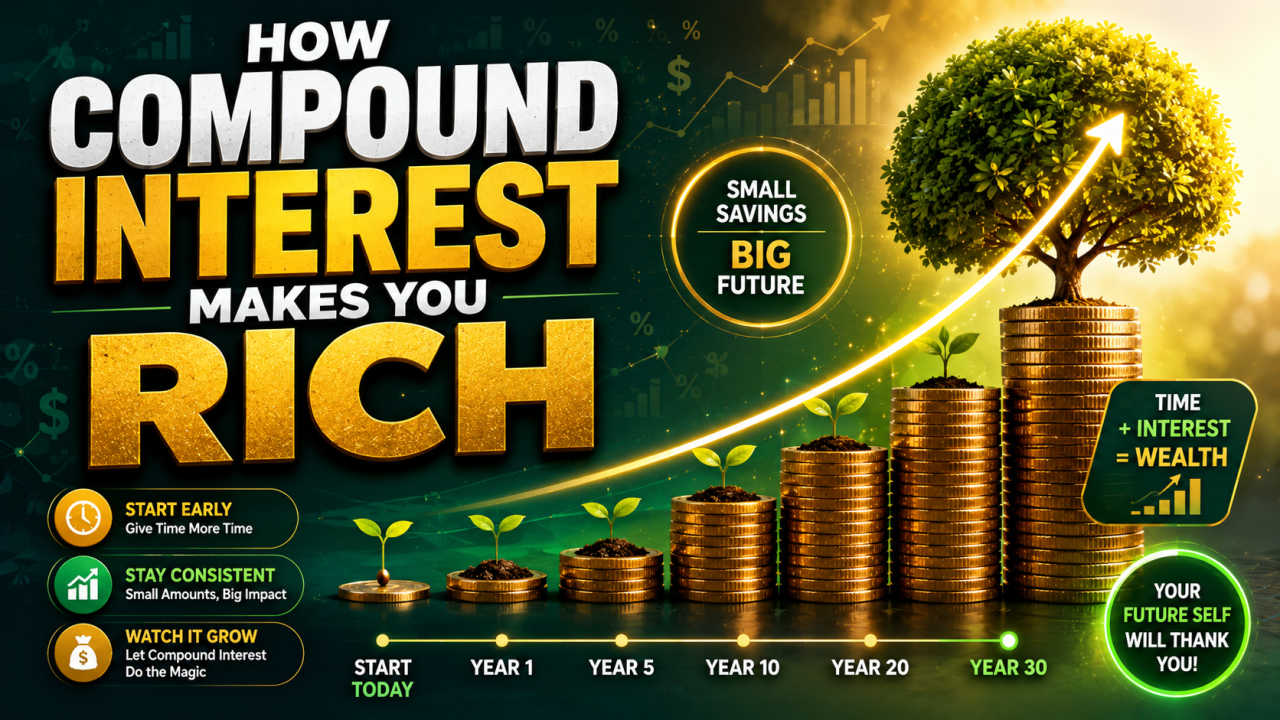
How Compound Interest Makes You Rich (2026 Beginner Guide)
Imagine investing money once and watching it continue to grow year after year—not only earning returns on your original investment but also earning returns on the returns you've already received. That's the power of compound interest.
Compound interest is one of the most effective tools for building long-term wealth. It rewards consistency, patience, and starting early. Whether you're saving for retirement, investing in mutual funds, or simply growing your savings, understanding compound interest can help you make smarter financial decisions.
Many successful investors emphasize the importance of letting investments grow over time. The longer your money stays invested, the greater the effect of compounding.
In this beginner-friendly guide, you'll learn what compound interest is, how it works, why time matters, and practical strategies to make compound interest work for you.
What Is Compound Interest?
Compound interest is interest earned on both your original investment (called the principal) and the interest that has already been added to it.
Unlike simple interest, which is calculated only on the original amount, compound interest allows your money to grow at an accelerating rate over time.
You can think of it as "earning interest on your interest."
Compound Interest Formula
The future value of an investment with compound interest can be expressed as:
::contentReference[oaicite:0]{index=0}
Where:
- FV = Future Value
- PV = Present Value (your initial investment)
- r = Annual interest rate (in decimal form)
- n = Number of years invested
Don't worry if the formula looks unfamiliar. In practice, online investment calculators and financial apps perform these calculations automatically.
Simple Interest vs. Compound Interest
Understanding the difference between these two concepts is essential.
| Simple Interest | Compound Interest |
|---|---|
| Earned only on the original principal | Earned on both principal and accumulated interest |
| Slower growth | Faster growth over time |
| Linear increase | Exponential increase |
| Common in some short-term loans | Common in investments and savings |
The key advantage of compound interest is that your investment growth accelerates as time passes.
Why Compound Interest Is So Powerful
Compound interest becomes more effective the longer your money remains invested.
Instead of restarting each year, your earnings stay invested and begin generating additional earnings.
Over long periods, this creates a snowball effect where your wealth grows faster and faster.
Three factors influence compound growth:
- The amount you invest
- The rate of return
- The length of time you stay invested
Of these three, time is often the most powerful factor because it allows compounding to work for many years.
Example 1: Investing $1,000
Suppose you invest:
- Initial Investment: $1,000
- Annual Return: 10%
- Investment Period: 20 years
With compound interest, your investment grows substantially because each year's earnings remain invested and continue generating returns.
Although the annual return stays the same, the dollar amount earned each year gradually increases because the investment balance becomes larger over time.
Example 2: Investing Every Month
Now imagine investing:
- $200 per month
- Average annual return: 10%
- Investment period: 25 years
Instead of relying only on your original investment, you're continuously adding new money while previous contributions continue compounding.
This combination of regular investing and compound growth can produce significantly larger long-term results than saving without earning returns.
Why Starting Early Matters
One of the biggest advantages in investing is time.
Consider two investors:
Investor A
- Starts investing at age 25
- Invests consistently for many years
Investor B
- Starts investing at age 35
- Invests the same amount each month
Even if both earn the same average return, Investor A is likely to accumulate substantially more wealth simply because their money had more time to compound.
This is why many financial planners encourage people to start investing as early as possible—even with small amounts.
10 Ways to Maximize Compound Interest
Compound interest works best when you combine patience with smart financial habits. Here are practical ways to make your money grow faster.
1. Start Investing Early
Time is the biggest advantage when it comes to compounding.
For example:
- Investing at age 25 gives your money decades to grow.
- Waiting until age 35 means losing ten valuable years of compounding.
Even small investments made early can outperform larger investments started later.
2. Invest Regularly
Instead of investing only once, contribute consistently.
Examples include:
- Monthly investments
- Bi-weekly contributions
- Automatic investment plans
Regular investing helps build wealth steadily and reduces the impact of market fluctuations.
3. Reinvest Your Earnings
Don't withdraw dividends or interest unless you truly need the money.
Reinvesting allows your earnings to generate even more earnings, increasing the power of compounding.
4. Stay Invested for the Long Term
The biggest gains from compound interest usually occur during the later years.
Many investors make the mistake of withdrawing their money too early.
Patience is one of the most valuable investing skills.
5. Increase Your Contributions
Whenever your income increases, try increasing your investment amount.
Examples:
- Salary raises
- Annual bonuses
- Freelance income
- Business profits
Even small increases can significantly improve long-term results.
6. Avoid Unnecessary Withdrawals
Every withdrawal reduces the amount of money available to compound.
Unless it's an emergency or a planned financial goal, allow your investments to continue growing.
7. Choose Investments with Growth Potential
Historically, long-term investments have offered better growth opportunities than simply holding cash.
Examples include:
- Index funds
- Mutual funds
- ETFs
- Retirement accounts
- Dividend-paying stocks
Always choose investments that match your financial goals and risk tolerance.
8. Minimize Investment Fees
High management fees reduce your long-term returns.
Even a small difference in annual fees can result in thousands of dollars over several decades.
Compare investment costs before making decisions.
9. Stay Consistent During Market Ups and Downs
Financial markets naturally experience periods of growth and decline.
Successful long-term investors often continue investing through market fluctuations instead of trying to predict short-term movements.
Consistency allows compounding to continue working over time.
10. Keep Learning About Investing
Improving your financial knowledge helps you make better long-term decisions.
Learn about:
- Asset allocation
- Diversification
- Risk management
- Retirement planning
- Tax-efficient investing
Knowledge can be one of your greatest financial assets.
The Rule of 72
One simple way to estimate how long it takes an investment to double is the Rule of 72.
Divide 72 by your expected annual rate of return.
Examples:
| Annual Return | Years to Double |
|---|---|
| 6% | 12 Years |
| 8% | 9 Years |
| 10% | 7.2 Years |
| 12% | 6 Years |
The Rule of 72 provides a quick estimate and is useful for comparing investment opportunities.
Best Investments That Benefit from Compound Interest
Compound interest can work across many types of investments.
Popular options include:
- Retirement accounts
- Index funds
- Mutual funds
- Exchange-Traded Funds (ETFs)
- Dividend-paying stocks
- Certificates of Deposit (CDs)
- High-yield savings accounts
- Bonds that reinvest interest
The best option depends on your investment goals, time horizon, and risk tolerance.
Common Compound Interest Mistakes
Avoid these mistakes if you want to maximize long-term growth.
Waiting Too Long
Many people delay investing because they believe they need a large amount of money.
Starting early with a small amount is often more beneficial than waiting to invest a larger amount later.
Withdrawing Earnings Too Soon
Removing profits interrupts the compounding process.
Allowing earnings to remain invested gives them the opportunity to generate additional returns.
Investing Inconsistently
Skipping contributions slows your long-term progress.
Automatic monthly investing helps maintain consistency.
Chasing Quick Profits
Attempting to get rich quickly often leads to unnecessary risks.
Compound interest rewards patience rather than speculation.
Ignoring Inflation
Inflation reduces purchasing power over time.
When planning long-term investments, consider both expected returns and the impact of inflation.
Common Myths About Compound Interest
Myth 1: You Need a Lot of Money to Start
False.
Many investment platforms allow beginners to start with relatively small amounts.
Myth 2: Compound Interest Works Quickly
False.
The greatest growth typically happens after many years of consistent investing.
Myth 3: Investing Is Only for Experts
False.
Many beginner-friendly investment options make long-term investing accessible to most people.
Myth 4: Timing the Market Is More Important Than Time in the Market
While buying at favorable prices can help, staying invested over the long term has historically been a key driver of compound growth.
Simple Interest vs Compound Interest Example
| Feature | Simple Interest | Compound Interest |
|---|---|---|
| Interest Calculated On | Principal Only | Principal + Previous Interest |
| Growth Rate | Constant | Accelerating |
| Long-Term Wealth | Lower | Higher |
| Best For | Short-term loans | Long-term investing |
| Wealth Building Potential | Limited | Excellent |
For investors focused on long-term financial growth, compound interest generally offers a much stronger opportunity to build wealth.
Frequently Asked Questions (FAQs)
1. What is compound interest?
Compound interest is the process of earning interest not only on your original investment (principal) but also on the interest you've already earned. Over time, this creates exponential growth, making it one of the most powerful ways to build wealth.
2. Why is compound interest important?
Compound interest helps your money grow faster because your earnings continue generating additional earnings. The longer your money stays invested, the greater the compounding effect.
3. What's the difference between simple interest and compound interest?
Simple interest is calculated only on the original principal, while compound interest is calculated on both the principal and previously earned interest. This makes compound interest much more effective for long-term investing.
4. How often is compound interest calculated?
It depends on the financial product. Interest may be compounded:
- Daily
- Monthly
- Quarterly
- Annually
More frequent compounding generally results in slightly higher returns over time.
5. Can I benefit from compound interest with a small investment?
Yes. One of the biggest advantages of compound interest is that you don't need a large amount to start. Regular contributions and patience are more important than investing a large sum upfront.
6. What investments use compound interest?
Many financial products benefit from compounding, including:
- High-yield savings accounts
- Mutual funds
- Index funds
- Exchange-Traded Funds (ETFs)
- Dividend reinvestment plans
- Retirement accounts
- Certificates of Deposit (CDs)
7. How long does compound interest take to show significant growth?
Compound interest becomes more powerful over long periods. While you'll see gradual growth in the early years, the most substantial gains often occur after 15–20 years of consistent investing.
8. What is the Rule of 72?
The Rule of 72 is a simple formula used to estimate how long it takes for an investment to double.
Formula:
72 ÷ Annual Rate of Return = Approximate Years to Double
For example, if your investment earns 8% annually:
72 ÷ 8 = 9 years
9. Can compound interest make you rich?
Compound interest alone doesn't guarantee wealth, but combined with regular investing, disciplined saving, and a long investment horizon, it can significantly increase your net worth over time.
10. How can I maximize compound interest?
You can maximize compounding by:
- Starting early
- Investing consistently
- Reinvesting earnings
- Avoiding unnecessary withdrawals
- Increasing contributions over time
- Staying invested for the long term
- Keeping investment costs low
Compound Interest Checklist
Use this checklist to make compound interest work for you.
✅ Start investing as early as possible.
✅ Invest consistently every month.
✅ Reinvest dividends and interest.
✅ Increase contributions after salary raises.
✅ Avoid withdrawing investments too early.
✅ Diversify your investments.
✅ Keep investment fees low.
✅ Stay invested during market fluctuations.
✅ Review your portfolio annually.
✅ Focus on long-term financial goals.
Key Takeaways
- Compound interest allows your money to earn returns on both the original investment and accumulated earnings.
- Time is one of the most important factors in maximizing compound growth.
- Consistent investing often produces better long-term results than trying to time the market.
- Reinvesting your earnings accelerates wealth creation.
- Starting early—even with small amounts—can have a significant impact over decades.
Final Thoughts
Compound interest is often called one of the most powerful concepts in personal finance because it rewards patience and consistency. While it may seem slow at first, its true strength becomes evident over many years as your earnings begin generating even more earnings.
You don't need to be wealthy to benefit from compounding. Starting with modest, regular investments and staying committed to your plan can help you build substantial wealth over time.
The sooner you begin, the more time compound interest has to work in your favor.
Start Using Compound Interest Today
Ready to put compound interest to work?
Here's a simple action plan:
- Set a long-term financial goal.
- Open an investment or savings account suited to your needs.
- Automate monthly contributions.
- Reinvest your earnings whenever possible.
- Stay invested and review your progress regularly.
Building wealth doesn't happen overnight—but with consistency, patience, and the power of compound interest, every investment can bring you closer to your financial goals.