
50/30/20 Budget Rule Explained with Examples (2026 Guide)
Managing money can feel overwhelming, especially if you're just starting your financial journey. Between paying bills, saving for the future, and enjoying life, it's easy to lose track of where your money goes.
That's where the 50/30/20 budget rule comes in. It's one of the simplest and most popular budgeting methods because it provides a clear framework for managing your income without requiring complicated spreadsheets or financial expertise.
Whether you're a student, salaried employee, freelancer, or small business owner, the 50/30/20 rule can help you spend wisely, save consistently, and reduce financial stress.
In this beginner-friendly guide, you'll learn how the 50/30/20 budget rule works, how to calculate your budget, real-life examples, common mistakes to avoid, and practical tips to make this budgeting method work for you.
What Is the 50/30/20 Budget Rule?
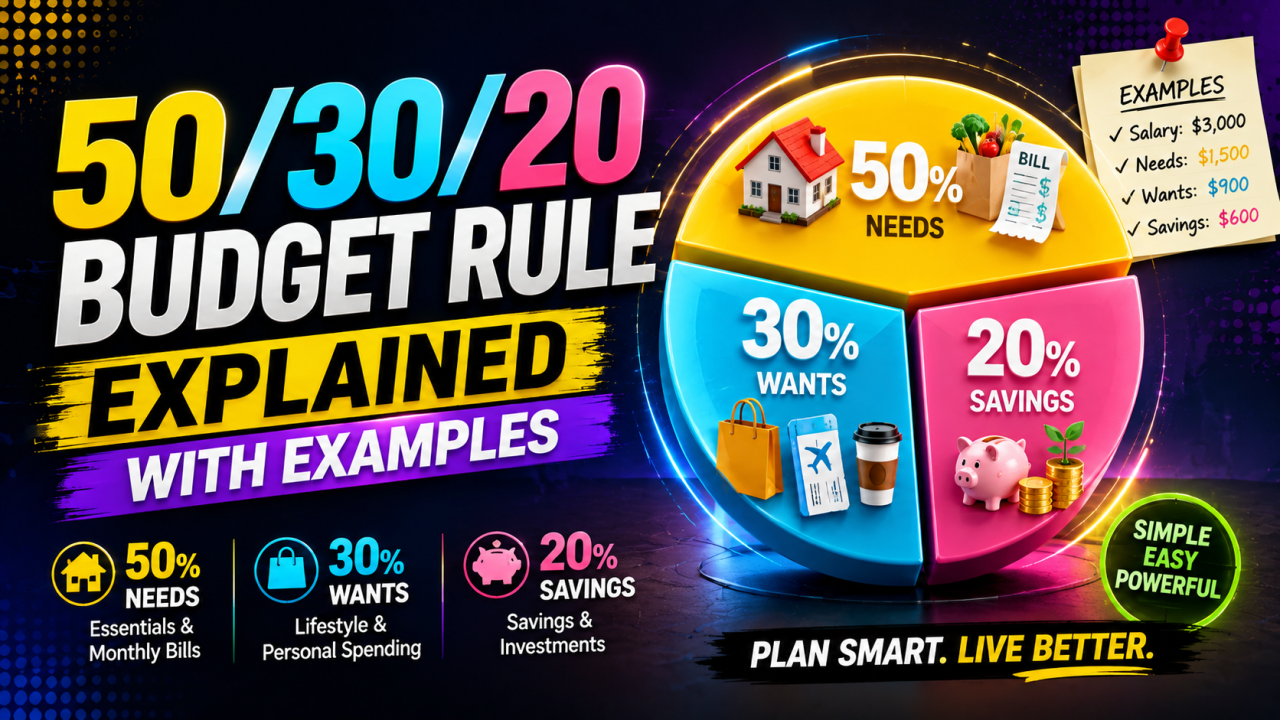
The 50/30/20 budget rule is a simple budgeting method that divides your after-tax monthly income into three categories:
- 50% for Needs
- 30% for Wants
- 20% for Savings and Debt Repayment
Instead of tracking every single expense, this rule focuses on allocating your income into broad spending categories, making budgeting easier and more sustainable.
Why Is the 50/30/20 Rule So Popular?
Millions of people use this budgeting strategy because it's:
- Easy to understand
- Beginner-friendly
- Flexible
- Suitable for most income levels
- Helps build savings
- Encourages responsible spending
- Reduces financial stress
- Supports long-term financial goals
Unlike strict budgeting methods, the 50/30/20 rule allows room for enjoyment while still prioritizing financial security.
Breaking Down the 50/30/20 Rule
Let's look at each category in detail.
50% – Needs
Needs are essential expenses that you must pay to maintain your daily life.
Examples include:
- Rent or mortgage
- Groceries
- Electricity and water bills
- Internet and mobile bills
- Transportation
- Insurance
- Healthcare
- Loan EMIs
- Childcare
- Basic clothing
If an expense is necessary for your survival or ability to work, it belongs in the Needs category.
30% – Wants
Wants are non-essential expenses that improve your lifestyle but aren't necessary.
Examples include:
- Dining out
- Coffee shops
- Shopping
- Streaming subscriptions
- Movies
- Vacations
- Gaming
- Gym memberships
- Entertainment
- Premium apps
Enjoying your money is important—but keeping these expenses within 30% helps maintain financial balance.
20% – Savings and Debt Repayment
The final 20% should go toward building your financial future.
This category includes:
- Emergency fund
- Retirement savings
- SIPs and mutual funds
- Fixed deposits
- Stock investments
- Extra loan repayments
- Credit card debt
- Education savings
Paying yourself first is one of the most effective ways to achieve long-term financial stability.
How to Calculate the 50/30/20 Budget Rule
Follow these simple steps:
Step 1: Calculate Your Monthly Income
Use your after-tax monthly income.
Example:
Monthly Salary = ₹80,000
Step 2: Calculate 50%
₹80,000 × 50% = ₹40,000
Allocate this amount to your essential expenses.
Step 3: Calculate 30%
₹80,000 × 30% = ₹24,000
Use this for lifestyle and discretionary spending.
Step 4: Calculate 20%
₹80,000 × 20% = ₹16,000
Save or invest this amount every month.
Example Budget (₹80,000 Monthly Income)
| Category | Percentage | Amount |
|---|---|---|
| Needs | 50% | ₹40,000 |
| Wants | 30% | ₹24,000 |
| Savings & Debt | 20% | ₹16,000 |
This simple breakdown provides a clear roadmap for managing your monthly income without feeling restricted.
Real-Life Examples of the 50/30/20 Budget Rule
Let's see how the 50/30/20 rule works for different income levels.
Example 1: Monthly Income of ₹30,000
| Category | Percentage | Amount |
|---|---|---|
| Needs | 50% | ₹15,000 |
| Wants | 30% | ₹9,000 |
| Savings & Debt | 20% | ₹6,000 |
Suggested Breakdown
Needs (₹15,000)
- Rent – ₹7,000
- Groceries – ₹3,500
- Utilities – ₹2,000
- Transportation – ₹2,500
Wants (₹9,000)
- Dining Out – ₹2,500
- Entertainment – ₹2,000
- Shopping – ₹2,500
- Streaming Services – ₹2,000
Savings (₹6,000)
- Emergency Fund – ₹3,000
- SIP Investment – ₹2,000
- Extra Loan Payment – ₹1,000
Example 2: Monthly Income of ₹50,000
| Category | Percentage | Amount |
|---|---|---|
| Needs | 50% | ₹25,000 |
| Wants | 30% | ₹15,000 |
| Savings & Debt | 20% | ₹10,000 |
A possible allocation could be:
- Rent – ₹12,000
- Groceries – ₹5,000
- Bills – ₹3,000
- Transport – ₹5,000
- Entertainment – ₹5,000
- Shopping – ₹4,000
- Dining Out – ₹6,000
- Savings – ₹10,000
Example 3: Monthly Income of ₹1,00,000
| Category | Percentage | Amount |
|---|---|---|
| Needs | 50% | ₹50,000 |
| Wants | 30% | ₹30,000 |
| Savings & Debt | 20% | ₹20,000 |
Suggested allocation:
- Housing – ₹25,000
- Household Expenses – ₹10,000
- Transportation – ₹7,000
- Insurance – ₹8,000
- Travel & Entertainment – ₹15,000
- Shopping – ₹10,000
- Dining – ₹5,000
- Investments & Savings – ₹20,000
Benefits of the 50/30/20 Budget Rule
This budgeting method is popular because it is practical and easy to follow.
Easy for Beginners
You don't need financial expertise or complicated spreadsheets.
Encourages Saving
By allocating 20% of your income to savings and debt repayment, you build healthy financial habits.
Flexible
The rule adapts to different income levels and lifestyles.
Reduces Overspending
Separating needs from wants makes it easier to identify unnecessary expenses.
Supports Financial Goals
Whether you're saving for a house, a vacation, or retirement, the rule provides a structured approach.
Limitations of the 50/30/20 Rule
While effective for many people, it may not suit every financial situation.
High Cost of Living
In expensive cities, essential expenses may exceed 50% of your income.
Irregular Income
Freelancers and business owners with fluctuating income may need a more flexible budgeting approach.
Large Debt Payments
If you have significant debt, allocating only 20% to savings and repayments may not be enough.
Family Responsibilities
Families with children often have higher essential expenses, making the standard percentages harder to maintain.
Who Should Use the 50/30/20 Rule?
This budgeting method is ideal for:
- Students
- First-time employees
- Salaried professionals
- Freelancers with stable income
- Couples managing household expenses
- Anyone new to budgeting
If your finances are straightforward, this rule offers an excellent starting point.
Common Mistakes to Avoid
Confusing Needs and Wants
A premium streaming subscription is a want, while your internet bill for work may be a need.
Ignoring Emergency Savings
Unexpected expenses can disrupt your finances if you don't build an emergency fund.
Not Tracking Spending
Even with the 50/30/20 rule, reviewing your spending each month helps you stay on track.
Spending Savings on Non-Essentials
Avoid dipping into your savings for impulse purchases unless it's a genuine emergency.
Tips to Make the 50/30/20 Rule Work
- Track your expenses every month.
- Automate transfers to your savings account.
- Review your budget regularly.
- Reduce unnecessary subscriptions.
- Increase your savings whenever your income grows.
- Adjust the percentages if your financial situation changes.
- Focus on long-term consistency instead of perfection.
Remember, the goal is to build sustainable financial habits—not to follow the rule perfectly every month.
50/30/20 Rule vs Other Budgeting Methods
| Budgeting Method | Best For | Difficulty |
|---|---|---|
| 50/30/20 Rule | Beginners | Easy |
| Zero-Based Budget | Detailed planners | Medium |
| Envelope Budget | Cash spenders | Medium |
| Pay Yourself First | Long-term savers | Easy |
| Traditional Budget | Families | Medium |
The 50/30/20 rule remains one of the easiest methods to start budgeting while maintaining a healthy balance between spending and saving.
Frequently Asked Questions (FAQs)
1. What is the 50/30/20 budget rule?
The 50/30/20 budget rule is a simple budgeting method that divides your after-tax income into three categories:
- 50% for essential needs
- 30% for personal wants
- 20% for savings and debt repayment
It helps you manage money while maintaining a healthy balance between spending and saving.
2. Does the 50/30/20 rule work for everyone?
Not always. While it's an excellent starting point, people living in expensive cities, those with irregular incomes, or individuals carrying significant debt may need to adjust the percentages to fit their financial situation.
3. Should I calculate the budget before or after taxes?
The 50/30/20 rule is generally based on after-tax (take-home) income, as this reflects the amount you actually have available to spend and save.
4. What counts as "Needs"?
Needs are essential expenses required for daily living, such as:
- Rent or mortgage
- Groceries
- Utilities
- Transportation
- Insurance
- Healthcare
- Minimum loan or credit card payments
5. What counts as "Wants"?
Wants are non-essential expenses that improve your lifestyle, including:
- Dining out
- Shopping
- Entertainment
- Vacations
- Streaming services
- Hobbies
- Gym memberships
6. What should I include in the 20% savings category?
The savings category may include:
- Emergency fund
- Retirement savings
- Mutual funds or SIPs
- Fixed deposits
- Stock investments
- Extra debt repayments
- Education savings
7. Can I change the percentages?
Yes. The 50/30/20 rule is a guideline, not a strict rule. Depending on your goals and expenses, you might use a 60/20/20 or 40/30/30 split if it better suits your circumstances.
8. Is the 50/30/20 rule good for paying off debt?
Yes. The 20% category includes debt repayment. If you're focused on becoming debt-free, you may temporarily allocate more than 20% toward loan or credit card payments.
9. How often should I review my budget?
Review your budget at least once a month. Regular reviews help you adjust for income changes, unexpected expenses, and new financial goals.
10. What's the biggest mistake people make with the 50/30/20 rule?
A common mistake is classifying discretionary spending as a "need." Being honest about the difference between needs and wants is essential for the rule to be effective.
Quick Budget Calculator
Use this simple formula to estimate your monthly budget:
| Monthly Income | Needs (50%) | Wants (30%) | Savings (20%) |
|---|---|---|---|
| ₹30,000 | ₹15,000 | ₹9,000 | ₹6,000 |
| ₹50,000 | ₹25,000 | ₹15,000 | ₹10,000 |
| ₹75,000 | ₹37,500 | ₹22,500 | ₹15,000 |
| ₹1,00,000 | ₹50,000 | ₹30,000 | ₹20,000 |
| ₹1,50,000 | ₹75,000 | ₹45,000 | ₹30,000 |
Use these figures as a starting point and adjust them based on your financial priorities.
Key Takeaways
- The 50/30/20 rule is one of the easiest budgeting methods for beginners.
- Base your calculations on your after-tax income.
- Spend around 50% on essential needs.
- Keep lifestyle expenses close to 30%.
- Save or invest at least 20% whenever possible.
- Review your budget monthly and adjust it as your income or expenses change.
- Focus on consistency rather than perfection.
Final Thoughts
The 50/30/20 budget rule offers a practical framework for managing money without making budgeting feel overwhelming. By dividing your income into needs, wants, and savings, you can build healthier financial habits, reduce unnecessary spending, and make steady progress toward your financial goals.
Remember that no budgeting method is perfect for everyone. The percentages are guidelines—not fixed rules. As your income, responsibilities, or goals change, don't hesitate to adapt your budget to fit your circumstances.
The most successful budget is the one you can follow consistently.
Start Budgeting Today
You don't need complicated spreadsheets or financial expertise to take control of your money.
Start by:
- Calculating your monthly take-home income.
- Dividing it into the 50/30/20 categories.
- Tracking your spending each month.
- Adjusting your budget when necessary.
- Building your savings one month at a time.
Small financial habits practiced consistently can lead to long-term financial stability and greater peace of mind.